(1).jpg)
Tech Talent
The top functioning tech cities succeed in offering a set of fundamental benefits for the coding classes.

.jpg)
The pandemic and property
Across all our Tech Cities, tech companies had been prolific in taking new office space in recent years, in many instances overtaking financial services to become the biggest single occupier group.
Even during the pandemic major deals have been announced, a sign of sustained confidence in city centres. In August, Facebook signed a new 730,000 sq ft lease at New York’s landmark Farley building. Netflix announced in October plans to treble its office space in London. Tencent, ByteDance, Alibaba and Amazon are all making moves into, or expanding in, Singapore. TikTok is seeking space in London and Dublin.
But tech occupiers have also been contributing to rising levels of sublease space, particularly in tech-dominated San Francisco that, prior to the pandemic, was one of the tightest office markets in the US. Tech companies have long embraced flexible working and many quickly announced workforce-wide work from home directives in the wake of the pandemic. While some deals are happening, others are being put on hold or space is being shed as occupiers re-evaluate space needs.
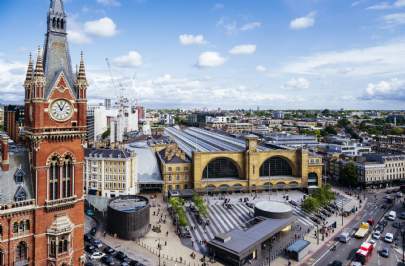
Flagship tech HQs will remain important, however, as places to instil company values, for staff to come together to collaborate and share ideas. Big tech companies have invested heavily in their urban HQs in a bid to attract the best staff, ranging from Amazon’s downtown Seattle HQ, complete with iconic biodomes, Google’s ‘landscraper’ under construction at Kings Cross in London, to Tencent’s 50-storey vertical campus in Shenzhen.
.jpg)
.jpg)
Testbeds for technology
These high-spec workplaces will only become more important as the pandemic recedes to tempt existing employees back into the office, and as a tool to attract the best and brightest of tomorrow’s talent. Skilled employees in the tech sector remain a scarce resource, even as unemployment rises in other professional sectors. More than an office, these spaces are also testbeds for the new technologies, products and services these companies are developing.
Many of our Tech Cities have seen costs of residential accommodation rise in recent years as workers flocked to these cities. The pandemic may slow this trend, at least in the West, as people seek a more diverse range of places in which to live, enabled in part by more homeworking.
This may open up city centres once again to a fresh crop of young trendsetters, the lifeblood of the tech sector. Rising availability in CBD offices may see districts previously out of reach become more affordable to scaling tech companies, opening up new parts of cities to the tech sector. Redundant retail, repurposed for these occupiers as satellite locations, could bring the office closer to worker’s homes.
Things are different in parts of Asia where smaller apartments make homeworking long-term unappealing. In China, nearly all staff have been back in the office for months already. We expect the Tech Megacities to continue to rule here, fuelling demand for office and residential space within them.
Across all cities, public transport will need to be complemented with good options for personal mobility, walking, cycling or scooters. Property located in neighbourhoods that do this well will be first to benefit from future demand.
The top functioning tech cities succeed in offering a set of fundamental benefits for the coding classes.
.jpg)
Tech cities thrive on venture capital investment. So, where in the world is the money going?

Global connectivity, complementary industries and a deep talent pool make Tech Megacities highly attractive to both scaling and established companies.
.jpg)
Tech Lifestyle Cities offer city living on a smaller footprint. This means shorter journeys for work and play, without sacrificing the buzz of a larger urban centre.
.jpg)
Rising Global Tech Contenders are the tech cities to watch. Economic growth in these cities is being fuelled by burgeoning tech sectors.
(1).jpg)
With the emphasis firmly placed on health and wellbeing, campus tech hubs offer an alternative to city-based locations.
.jpg "Savills")